Roots in the Wilderness
I grew up on a cattle ranch near the Cariboo Mountains in the interior of British Columbia, Canada. Our nearest neighbour lived five miles away. We didn't have hydro power — our house ran on an old Lister diesel generator used sparingly, only in the evenings. No regular phone service, no cell phones. We used a radio telephone and only when necessary. No television. Computers were still science fiction.
My spare time was spent reading or doing chores. There was no such thing as boredom—just work that needed doing. This was life, and it shaped everything I am today.
Lessons From a Different Time
My grandmother had a trapline, and I helped her run it. My grandfather mined for gold the old way—no bulldozers, no crew. I was his crew. I started helping him when I was twelve years old, slogging through creeks, battling mosquitoes and black flies, carrying his sluice box and equipment.
I learned to ride a horse so young I don't remember when I didn't know how. My brother and I were too young to be left home alone, so we spent long days in the saddle helping our parents round up cows in the Fall. My father and grandfather ran a guide outfitting area, taking hunters through the bush, and we tagged along whenever we could.
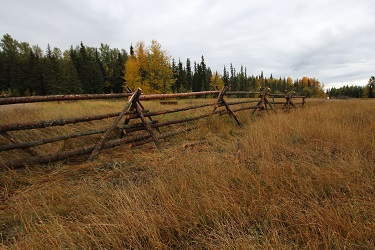
Rail fence
The Work That Built Me
Every summer of my youth was spent plowing, seeding, cutting, baling and stacking hay. Before we could grow the hay, we had to clear the fields. That meant picking sticks.
I was driving farming equipment before my feet could reach the pedals. In our spare time, we fixed fence lines—cutting pine trees, carrying them where we needed them, and assembling them into rail fences. I've built miles of fencing in my lifetime.
We cut and split enough firewood to last a winter, because our only heat was a wood stove. No backup. No second option. Get enough firewood, or freeze. That kind of clarity simplifies things.
Self-Sufficiency Wasn't a Choice, It Was Life
We had cows to feed and milk, eggs to collect, chicken houses to clean, gardens to weed, and machinery to fix—which is also where I learned how to swear properly. Almost everything on our dinner table came from our own sweat equity. Vegetables grew in our garden and stored in a root cellar. We made butter, cheese, and yogurt from our milk cow, who needed milking daily. No days off, no excuses.
We made jams and jellies, pickled what we could, kept bees for a time, raised chickens and pigs, and of course beef for our meat staples. We hunted deer and moose.
A Lifetime in Wood
I've worked with wood my entire life—in every form, in every capacity. It started with those miles of rail fences and corrals, cutting pine trees and hauling them to where they needed to be. I planted trees, thinned trees, and fell trees, and skidded trees with horses in logging operations. I've worked in construction for years, framed houses, timber framing, built and sold log beds, wood carving, and decades of carpentry repairs.
I've built from scratch, and I've spent countless hours breathing new life into old structures, working with whatever the original builder left me—which was rarely square or level. I became a stone mason, and spent over twenty five years working with stone.
Twenty Five Years Working Stone
I have built chimneys, fireplaces and restored heritage stone buildings—farmhouses falling back into the earth, crumbling fieldstone foundations, heritage walls that hadn't seen a mason's touch in over a century. I learned to read the original builder's hand, match their mortar, and coax strength back into structures that time had all but claimed.
There is a quiet dignity in saving something that was meant to last. I prefer stone work to brick work, as although there is a skill in brick work, I feel there is more artistic expression working with stone.
I Know Land
I can tell you why you don't plant a garden on a north-facing slope—unless you enjoy watching things struggle for sunlight while the frost settles in and stays. I can tell you which direction your door should face, and why it matters more than most people think. A door facing north in a Canadian winter is a decision you'll regret every time you open it. A door facing south catches the sun, stays drier, and welcomes you home instead of punishing you for coming back.
I know land. I've walked enough of it, worked enough of it, and made enough mistakes on it to know what makes a good homestead property and what will leave you fighting uphill for twenty years. The slope, the soil, the water source, the prevailing wind, the treeline, the sun's path across the sky—these aren't details. They're the difference between thriving and barely surviving. I can look at a piece of land and tell you where to put the house, where to put the garden, and where to just leave alone.
Some things you learn from books. Some things you learn by doing. And some things you learn by doing it wrong, then doing it over, then finally getting it right. I've done all of that. And I'm still here, still building, still learning.
A Different Lens
Because of my upbringing, I view the world through a different lens. I grew up off-grid before it was a lifestyle choice—it was just survival. I learned that everything you have comes from what you can build, grow, or fix with your own hands. I learned that work has dignity, and that the land doesn't care about your excuses.
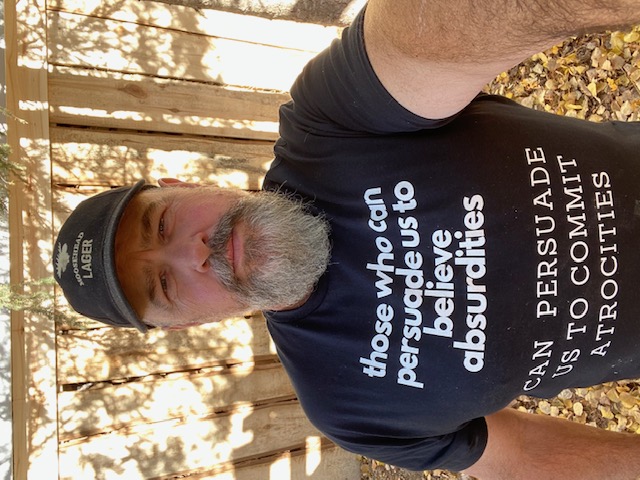
I've been deplatformed from Instagram twice, banned completely. I lost 40,000 subscribers on TikTok once, came back as Westernmac2.0, and now have an account warning. Apparently I've hit a nerve. Some people don't want this information shared. That's fine. That's why I'm here, on my own patch of digital land, saying what I want to say.
Should you follow me? Maybe. Maybe not. You decide. But if you're looking for someone who's actually done the things he talks about—who's built, fixed, grown, and survived—you've found him.
— Western Mac
